
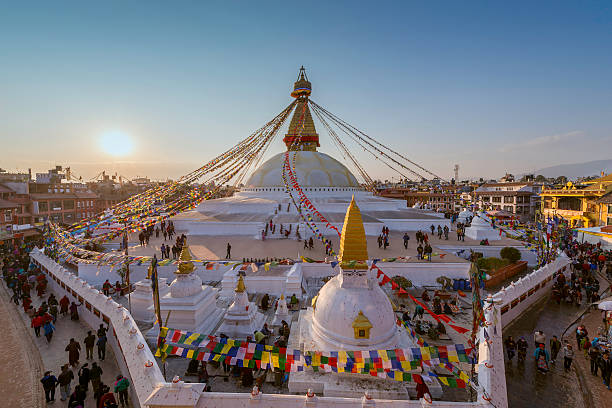
Boudhanath Stupa
When travelers talk about spiritual destinations in Nepal, one name that always shines bright is Boudhanath Stupa. Living here in Dubai and often guiding friends who plan their Nepal trips, I always say—if you really want to feel peace, culture, and heritage in one place, then you must visit Boudhanath Stupa in Kathmandu. It is not just a UNESCO World Heritage Site but also a living spiritual hub where tradition, culture, and modern tourism meet beautifully.
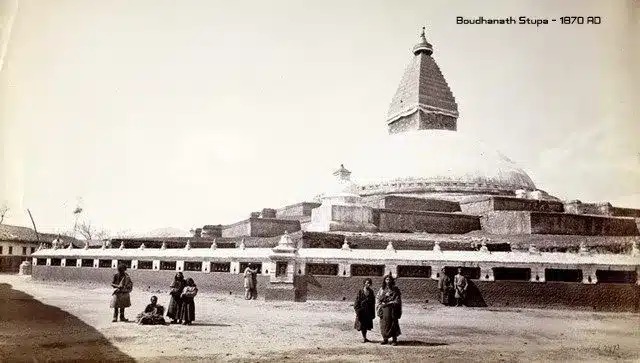
Historical Background
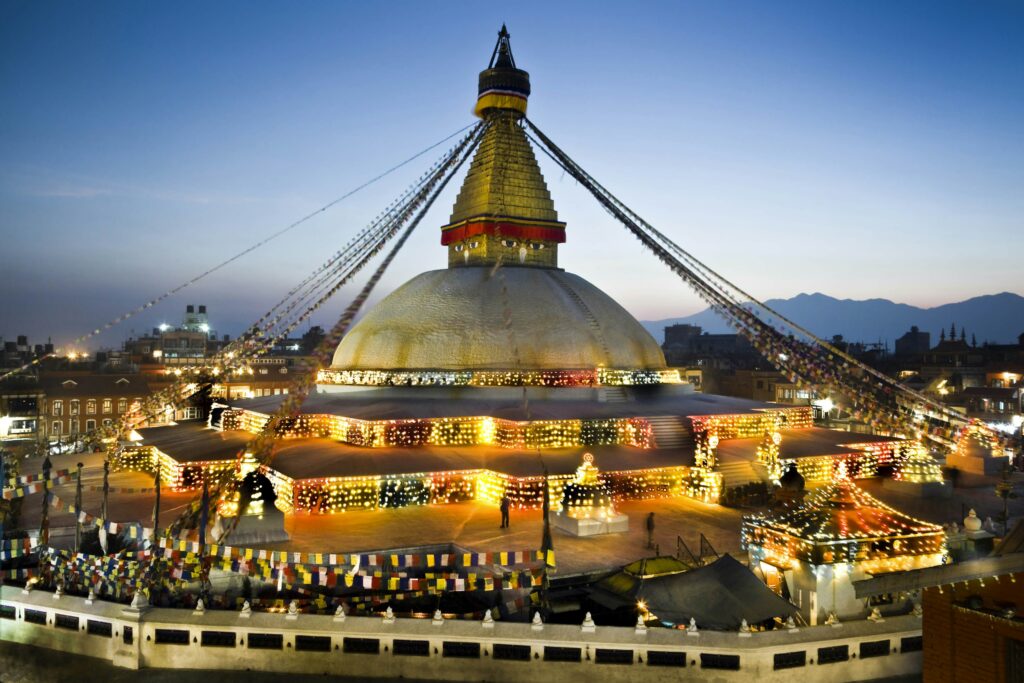
The Boudhanath Stupa is believed to have been built in the 5th century. For centuries, it has stood as one of the largest spherical stupas in the world and a central pilgrimage site for Buddhists. Legends say it was built after the passing of Lord Buddha, to preserve relics and to spread his teachings.
- Built: Around the 5th–6th century.
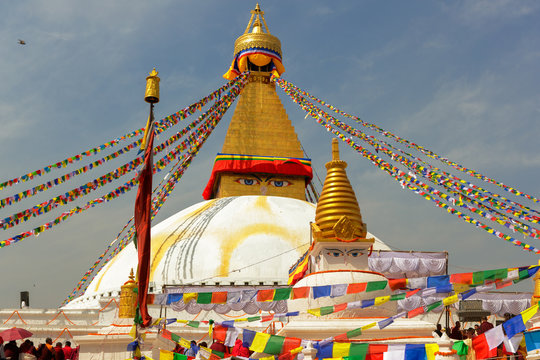
- Style: Mandala design, giant white dome, golden pinnacle, and Buddha’s “Wisdom Eyes.”
- Importance: Center of Tibetan Buddhism in Nepal.
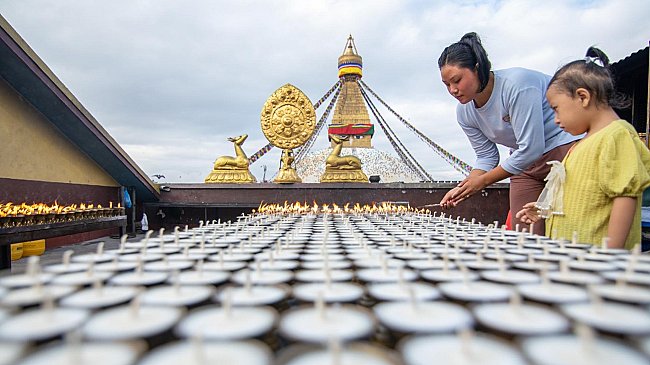
Whenever I visit Nepal from Dubai, my relatives always recommend going to Boudhanath Stupa early in the morning. The peaceful chants, the sound of prayer wheels, and the smell of incense make you feel like time has stopped.
Spiritual and Cultural Importance
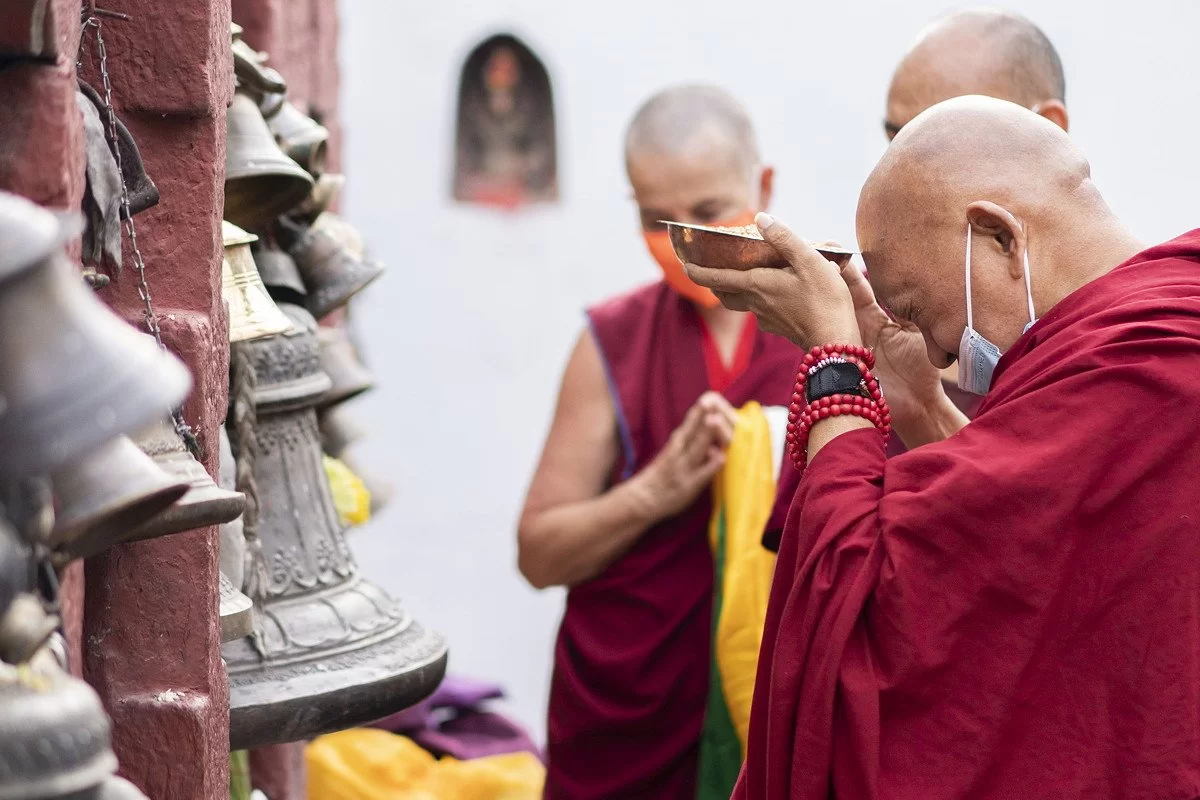
The Boudhanath Stupa is more than a tourist site; it’s the heart of Tibetan Buddhism in Nepal. Thousands of monks live in monasteries around the stupa, and during festivals like Losar (Tibetan New Year), the entire area becomes alive with rituals, dances, and prayers.
As a Nepali living in Dubai, whenever I go back home, I never miss visiting Boudhanath Stupa. It feels like connecting with my roots and finding peace away from the busy life abroad.
Things to Do
Tourists often ask me what they can actually do once inside. Well, trust me, there’s so much to experience in and around Boudhanath Stupa:
- Do a Kora (circumambulation) around the stupa clockwise.
- Spin the prayer wheels and feel the spiritual energy.
- Visit monasteries nearby and watch monks in prayer.
- Sit in rooftop cafés and enjoy panoramic views of Boudhanath Stupa.
- Buy Tibetan handicrafts, incense, and Thangka paintings.
Every time I sit in a rooftop café overlooking Boudhanath Stupa, I feel like I’ve traveled back in time. The peaceful chants and fluttering prayer flags make it a unique experience.
Things Not Allowed
As a tourist, it’s important to respect the rules at Stupa:
- You cannot climb on the stupa itself.
- Loud music or shouting is disrespectful.
- Flying drones is not allowed.
- Littering or disturbing religious ceremonies is strictly prohibited.
If you respect the culture, the locals will always welcome you warmly at Boudhanath Stupa
Tourist Guide
How To Reach
Reaching Boudhanath Stupa is very easy from Kathmandu city and even from Tribhuvan International Airport.
- From Airport: Only 20 minutes by taxi.
- Taxi Fare: Around NPR 300–600 ($3–5).
- Local Bus/Micro: Cheaper option, around NPR 20–40.
If you are visiting Nepal for the first time, I recommend taking a taxi for comfort. But if you want to experience local life, then hopping on a public bus to Boudhanath Stupa is also fun.
Opening Hours
- Opening Time: 5:00 AM
- Closing Time: 8:00 PM
- Best Time to Visit: Morning (for peaceful environment) or evening (for beautiful lighting and butter lamp ceremonies).
When visit in the evening, the entire Stupa lit up with butter lamps—it was magical.
Entry Fee
- Foreign Tourists: NPR 400 (~$3–4)
- SAARC Nationals: NPR 100
- Nepali Citizens: Free
This fee is used for the preservation and cleanliness of Stupa, so I think it’s worth every rupee.
Travel Tips for Visiting
- Go Early or Late – Mornings are peaceful; evenings are magical.
- Dress Modestly – It’s a religious site, so wear decent clothes.
- Try Tibetan Food – The momos around Stupa are delicious.
- Photography Tips – Best photos are from rooftop cafés or during sunset.
- Safety – Keep an eye on your belongings in crowded times.
Nearby Attractions
Visiting Boudhanath Stupa is not just about the stupa itself; the surrounding area also offers some of the most important religious and cultural sites in Kathmandu.
Pashupatinath Temple
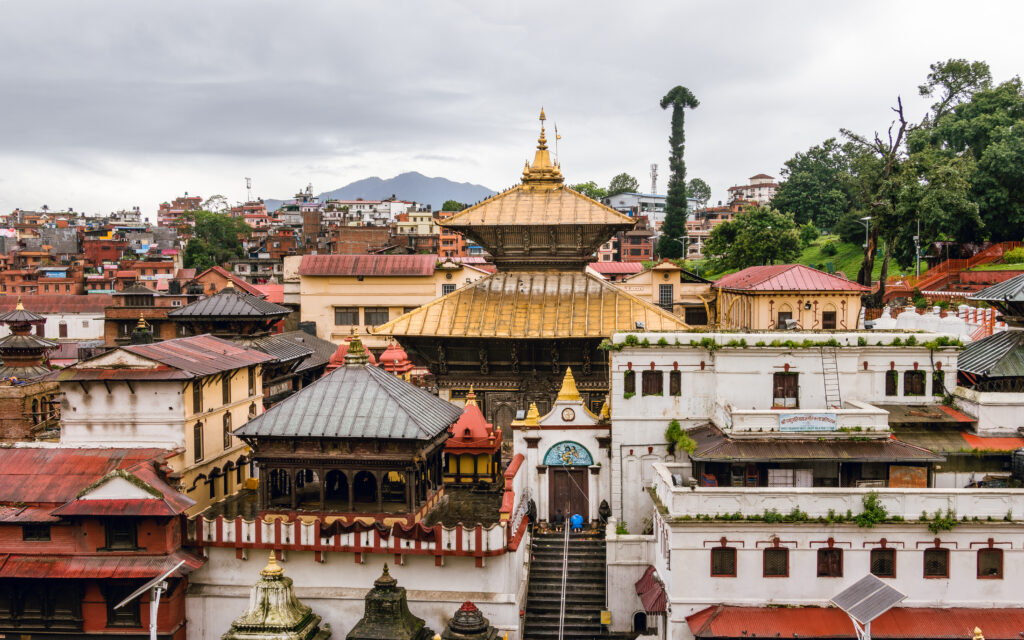
Located just 2 km away from Boudhanath Stupa, Pashupatinath Temple is one of the most sacred Hindu temples in the world, dedicated to Lord Shiva. It is also a UNESCO World Heritage Site and attracts thousands of devotees during Maha Shivaratri. Many tourists combine both visits in a single day.
Guheshwari Temple
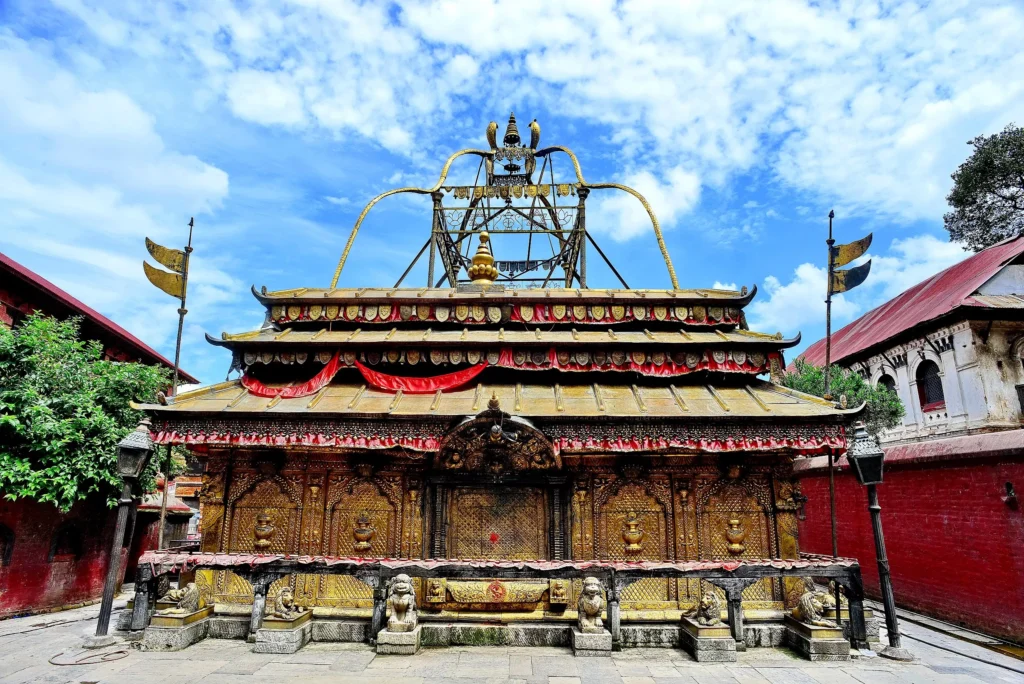
Very close to Pashupatinath Temple lies the Guheshwari Temple, dedicated to Goddess Parvati. It is considered one of the Shakti Peeths and holds great significance for both Hindu and Tantric traditions. Pilgrims often visit this temple after worshipping at Pashupatinath Temple.
Conclusion
The Boudhanath Stupa is not just a place to visit—it’s a place to experience. From its deep history to its peaceful atmosphere, it offers something unique to every traveler. Whether you’re coming for photography, culture, or spiritual reasons, Boudhanath Stupa will remain in your memory forever.
The temple represents the fusion of faith and culture, showing how deeply Hinduism is intertwined with Nepalese identity. It is not only a place for worship but also a center of art, music, philosophy, and traditional values.